Review: The Chemical Garden Trilogy by Lauren DeStefano

ChemicalGardenTrilogy_zps9084f5c1(Warning: As this is a series review, only my comments of Wither will be non-spoiler. When commenting on the sequels, Fever and Sever I may spoil the contents of the previous books.)

I’ve had the first book Wither on my shelf for about two years, and only managed to read the first fifty pages before I put it down for some unknown reason. I thought it was about time to give the series another shot, so here’s what I thought of what was promised to be a dystopian, and ended up being like The Selection gone wrong.

W  I  T  H  E  R

For a first book in the series, I could forgive a lot of things. It was Lauren DeStefano’s debut novel, and dystopian is always going to be a hard genre to write because so much thought has to go into the world, it’s purpose and what went wrong. Because of this, I think the writing style was a bit clumsy. The USP of Wither is that women die at 20 and men at 25. We’re told this fact on three consecutive pages. More trust needed to be put into the reader understanding the basics of the world, especially if it’s described on the blurb!

Along with the immediate death thing, girls are sold off to men at the highest bidder. Rhine, the protagonist, is sold to Linden Ashby, along with two other girls, Jenna and Cecily. Bigamy is apparently OK in this world. It was a very strange concept to read, especially the jealously that seethed between all the girls, despite two of them saying they didn’t really love Linden. I was quite uncomfortable with the whole set up.

Rhine was an OK character. We were told that she was special, because she had two different colour eyes, but for me she didn’t seem very special at all. There was nothing about her that was better than the other girls she was compared to. Jenna was probably my favourite of the girls, and I got to know the least about her. Cecily was downright annoying. Linden had absolutely no spine and no clue. Vaughan felt like a stock villain. He was doing evil things, but it’s not given a real explanation to why he’s so evil. If he’s not trying to find an antidote to the killing virus, what is he doing?

As for the romance, golly was it forced. Rhine and Gabriel didn’t get to see each other a lot, and it was like kindness was mistaken for love. I don’t doubt they do love each other, it’s just that I would have liked a bit more interaction between the two before they decided to try and escape together.

When reading Wither, I felt as trapped as Rhine in the Governor’s mansion. The pacing was erratic, days would pass and the only awareness would be sentences like “it was a cold December” and then it would click how long it had been. If I were to boil the book down to its essence, not a lot would have happened. Two people would have fallen in love, been thwarted and tried to run away. But, I had a lot of hope for Fever.

F  E  V  E  R

Second book syndrome to the max. Rhine and Gabriel managed to escape, otherwise this wouldn’t be a series, BUT, did they really escape only to be captured by a different villainous character? If I thought the first book was repetitive, Fever took it to a whole new level.

Gabriel and Rhine both get sick at different times in the book, hence the title. Reading so many scenes of delirium and falling asleep got so boring, I thought I was going to drop off myself! The whole book put me in this very weird, lethargic mood.

The new characters were interesting, I guess, but generally the same as the girls and villains we’d been introduced to in Wither. Not enough time was spent with any of them to truly gain an understanding of their character. Maddie holds the most potential for Sever, but not by much.

And, after another 340 pages, we’re still no closer to Rhine’s true goal: to find her brother, Rowan. That’s what this whole book was supposed to be about, the driving force behind her wanting to escape Linden’s mansion in the first place. I was annoyed with how this book didn’t propel the plot forward, but seemed to hinder it, instead.

S   E   V   E   R

I left at least a month between reading Sever and Fever, so I was a little out of the loop, but generally, I was surprised by how much I loved the ending. It gave a nice conclusion to all of the remaining characters’ lives, and finally addressed where the heck Gideon ended up after Fever. 

Overall, the last book felt very back-and-forth, like any progress that was made in the first two was completely eradicated. Rhine ended up back at the evil wife mansion. What gave this book purpose was the introduction of Rowan, Rhine’s twin brother, who she’d been searching for since Wither. He was an OK character, I guess, but didn’t really understand how traumatised Rhine had been by Vaughan. Nothing he said could convince me that Vaughan was a good guy. He was evil through and through.

I was very aware when I began the series that it was going to end in a genetic experiment, because how else were they going to solve the deaths of their young people? Being aware of the cliche before the ending helped to accept that this was one of the only incidences it would have made sense, unlike any other kind of dystopian society, explained any by genetic experimentation.

As I said, all the characters got…an ending. It might not have been happy, but at least all the little loose ends were tied. We found out the secret Jenna was hiding, and the backstory of Rose, and what made Madame so relevant. Cecily became much less annoying and Rhine, only a little bit worse for wear, got what she wanted: freedom.

I really would recommend this series to those that liked The Selection by Keira Cass, and are fond of the dystopian genre. It’s a little more tame than other dystopians, gentle and simple. In the end, I’m giving the series 3.5 stars, and in order of my favourites: Wither, Sever and then Fever. 
Review: The Divergent Series by Veronica Roth

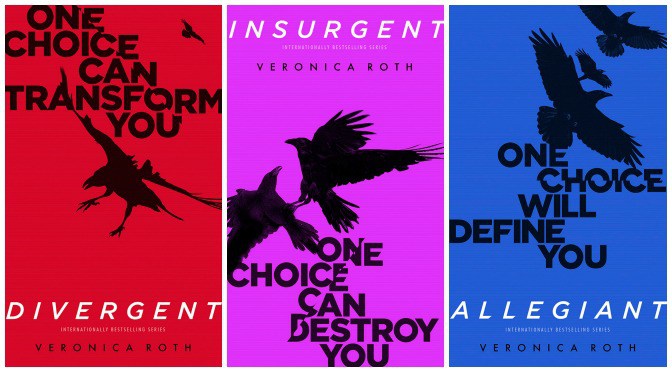
divergent-covers
D  I  V  E  R  G  E  N  T
Divergent 
is one of the best dystopian books out there. Tris was so refreshing and determined, she didn’t whine about her situation, or second guess. She knew that Dauntless was where she was meant to be. The world was fascinating, and it was easy to imagine how the world would be divided by personality traits. Everyone loves the idea of sorting themselves, whether it be in a Hogwarts house or a District, so to have Factions was really cool for fan involvement.
The romantic relationship didn’t overpower the book. Tris and Four seemed to complete each other…to begin with.
The villains were villainous. Like, actually evil. I just wanted to cower away from Peter while reading it. And what about Eric? That guy gave me the creeps, especially when he forced Christina over the edge of the cavern. The rest of the Dauntless faction were a fun bunch too, a lot of the room for moral dilemma.
Divergent was filled with action: the capture-the-flag style game is one of my favourite scenes. And, everyone loves the underdog, so watching Tris go from a weakling to a fighter was amazing. I really cheered her on the whole way. But, Dauntless was about more than physical fighting so how unforgettable were the simulations? I still can’t stop thinking about when Tris had those birds clawing into her mouth, and it’s been two years since I read the book!
What made it even more successful was the idea that there was something going on, on a larger scale. What the heck was Jeannine up to? Why were the Divergents such a threat? It meant that the sequel had a lot of potential.

I  N  S  U  R  G  E  N  T
Insurgent 
definitely suffered from second-book-syndrome. I think this is mostly because it wasn’t as memorable as the first book. The battles were spicing up and they did a lot more…battle. And running. We can’t forget about the running.
It was definitely a good plan for the team to go to Amity. Getting to learn more about the ins and outs of each faction, and discover that things aren’t always as happy as they seem was great, because you started to wonder just how flawed the faction system was. Giving a voice to the factionless worked in the same way. Who was really better off?
But then we had Caleb who created the biggest ‘can-I-trust-you-just-because-we’re-related’ complex ever. Seriously, this guy never sorted out his priorities. And his priorities should have been with the Priors, am I right?! (Ahaha, that was too easy.)

A  L  L  E  G  I  A  N  T
But Allegiant on the other hand…I don’t know how to feel about it. I love the risk Veronica Roth took with the direction of the story. Realistically, it was the only way it could have gone, and aligned with her character’s personality. It was unexpected and fresh. The two viewpoints were new too, but I found the Tris and Four’s voices became indistinguishable.
There was a lot of unnecessary death in the last two books, some were sad and others were just…emotionally fodder. There doesn’t need to be so much death to build impact. But, the most disappointing was the explanation of the divergent phenomenon. I’ve previously stated that genetic experiments are my least favourite way to clarify a dystopian story, and I think the root of that dislike lies in Allegiant. 

My length and strength of my thoughts in indicative of how I felt about the series as a whole. I can 100% see myself re-reading Divergent but the other books in the series…well, not so much. Still, I think it’s a triumph that the progression of the series doesn’t stop me from wanting to re-read the first book. It’s still a gem and always will be.

Review: Wings Series by Aprilynne Pike

These beautiful, glittery pink books have been on Bee’s shelves for as long as I can remember. They were some of the first YA books she read, and mark the genesis of her love for faery fiction. This year, I made it my mission to read more of Bee’s books, and the Wings series is possibly my favourite thing so far.

Continue reading “Review: Wings Series by Aprilynne Pike”

Review: The Airhead Series by Meg Cabot

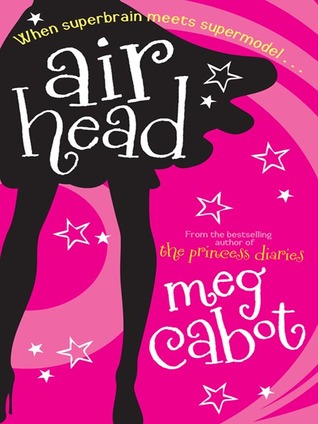
airheadHaving already made a post on ‘Airhead‘, the first book in the series, I thought it was best to review the rest of the books, however, I feel like I don’t really have a lot to say for the books, because the plot was very thin, so, this will be a culmination of my thoughts on both ‘Being Nikki’ and ‘Runaway’.

In my review of ‘Airhead’, I talked of how I was uncomfortable with the portrayal of girls just using their looks to interest guys, and the confused feminist messages that were coming across. Meg Cabot makes small headway to right this in ‘Runaway’, with the message that all girls are beautiful, and that beauty shouldn’t be the quality most desired by teenage girls. It was certainly the right thing to be writing about, when tweens and young teens are the target audience, but I still think appearance was being valued more than skill.

being nikkiThe plot seemed very laboured throughout both books. Em and Christopher were to bring down Stark Industries, and expose the brain transplanting surgery to the world. Although, this only happened at the end of the final book, it felt like a lot of unnecessary build up to get there. The spyware on Nikki’s computers wasn’t made a big deal of in the end, which I was surprised by as Em made multiple comments about it in the first book. A few different modelling jobs were thrown into the mix to keep it interesting, but I ended up just skim reading a lot of the book, just hoping to get to the action.

The discovery of Nikki and her family certainly added another element to the book, and certainly some conflict between her and Em. I was hoping, though, for a little more team work and a little less kidnapping. runaway

I did think that Robert Stark’s evil mission was well executed and a good idea, that was just the right amount of menacing, I just wish there had been more of a build up to the discovery, rather than the characters just assuming something shady was going on.

Overall, I’d give the series 2 stars. They are all the kind of books you can read in a day, and are fun to read in the moment, but not very memorable outside the final page. I enjoyed the mixture of contemporary worlds with scientific discoveries, and from the cover or title, ‘Airhead’ definitely delivered something different to what I was first expected. But, maybe my younger self made the right decision not finishing the series, because by the end it felt a little laboured. Em and Nikki are certainly interesting characters, but not exactly great role models. That said, I was pleased with how the series concluded. It had a sweet, and compromising, epilogue.

Review: The Uglies Trilogy by Scott Westerfeld

uglies seriesThe Uglies Series by Scott Westerfeld
Genre: Dystopian, Adventure
Published by: Simon Pulse
Format: E-Book
Rating: ★★.5
Where to Find: GoodReads | Amazon

A sticker on the Uglies series reads,  ‘Before the Hunger Games there was….’ This is one of my pet peeves, which probably deserves a post by itself. The idea that there were dystopian books before ‘The Hunger Games’ rose to popularity seems to astound people.

The concept of this series is all people are born ugly. When they turn sixteen, they become pretty, through surgery and genetic implants. It was interesting to read a book that discussed beauty and how its presented in a way that didn’t seem glaringly obvious. When you pick up this book, you’re not bombarded with a social agenda to redefine beauty. Tally, the protagonist, just wants to be pretty. Shay, her best friend, doesn’t.

Continue reading “Review: The Uglies Trilogy by Scott Westerfeld”